From 3 to 23 November, researchers from the Instituto de Astrofísica de Canarias (IAC) will bring astronomy to the public in the form of multiple activities, workshops and talks on the islands of Tenerife and Gran Canaria.
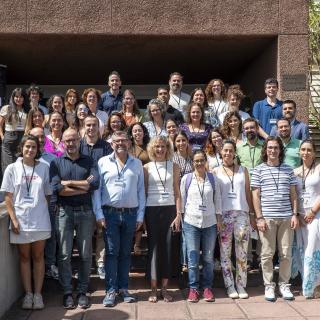
The event also hosted the first annual meeting of the CIARMA network, which was established as a result of the project’s activities with European project managers from the Canary Islands. The headquarters of the Instituto de Astrofisica de Canarias (IAC) in La Laguna hosted yesterday the 2nd Regional Meeting of ExGal-Twin, a Horizon Europe project coordinated by the IAC. The meeting was entitled “Innovation in project management in the Canary Islands (II): Artificial Intelligence and New Trends” and brought together professionals in European project management from across the archipelago. It
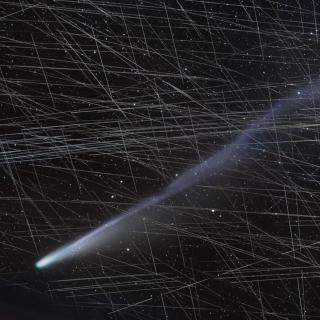
The Instituto de Astrofísica de Canarias (IAC), through its Communication and Scientific Culture Unit (UC3) and in collaboration with the Museum of Science and the Cosmos (MCC), part of Tenerife Museums, publishes the astronomical events for the year 2026 in its traditional calendar. The year 2026 will be marked by a total solar eclipse on 12 August, which will not be visible from the Canary Islands, but will be 70 per cent partial. In addition, 2026 will see the arrival of new comets, meteor showers and other interesting astronomical events. The IAC's 2026 Calendar is illustrated with a
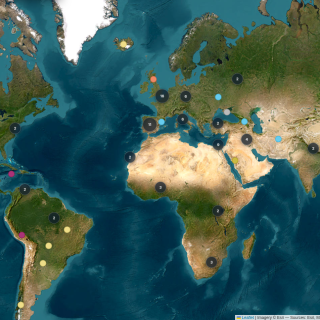
La Sociedad Española de Astronomía presenta “Un mundo de eclipses”, un mapa digital que recoge más de 100 elementos del patrimonio cultural de todo el mundo, desde la antigüedad a la actualidad. Un recurso educativo abierto que conecta ciencia, historia, arte y tradición. El Instituto de Astrofísica de Canarias (IAC) participa en esta iniciativa con varias aportaciones dedicadas a los eclipses en el antiguo Egipto, el Imperio hitita y el mundo aborigen canario, además de una entrada elaborada con el Instituto de Ciencias del Patrimonio (Incipit-CSIC) sobre el eclipse asociado a la muerte del