On August 12, coinciding with the total solar eclipse that will be visible across much of Spain, the Canary Islands Institute of Astrophysics (IAC)—a world leader in solar physics—will bring together leading scientists in Palencia. Most of them are affiliated with the NATE project, spearheaded by the institute, and they will conduct their work in front of the public in what is set to become one of the most significant scientific and educational events to take place in the country. Thus, starting on the 10th, talks and workshops will be held at various locations throughout the city of
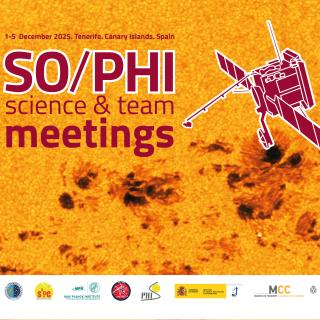
From today until 5 December 2025, the Instituto de Astrofísica de Canarias (IAC) is hosting the SO/PHI Science and Team Meetings, an international gathering focused on the scientific and technical advances of the Polarimetric and Helioseismic Imager (PHI) instrument aboard ESA's Solar Orbiter (SO) space mission. The development of PHI was co-led by the Spanish Space Solar Physics Consortium (S3PC), which also currently coordinates its scientific operation and exploitation. The IAC is part of this network. PHI is a high-precision solar observation instrument equipped with two telescopes—one
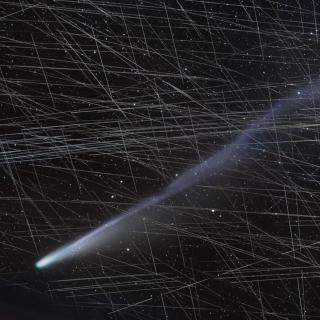
The Instituto de Astrofísica de Canarias (IAC), through its Communication and Scientific Culture Unit (UC3) and in collaboration with the Museum of Science and the Cosmos (MCC), part of Tenerife Museums, publishes the astronomical events for the year 2026 in its traditional calendar. The year 2026 will be marked by a total solar eclipse on 12 August, which will not be visible from the Canary Islands, but will be 70 per cent partial. In addition, 2026 will see the arrival of new comets, meteor showers and other interesting astronomical events. The IAC's 2026 Calendar is illustrated with a