
It may interest you
-
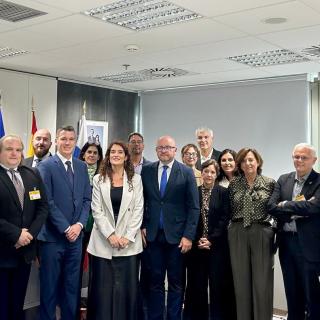 The European Solar Telescope (EST) project has taken a decisive step towards construction with the establishment of the Board of Governmental Representatives (BGR), marking the first formal commitment at the governmental level to this European flagship in solar research. Until now, EST has been driven by a scientific consortium of universities and research institutions across Europe. The creation of the BGR transforms EST into a collaboration among European nations, whose national governments lend political support to the project and to the creation of a future European Solar TelescopeAdvertised on
 -
 The Instituto de Astrofísica de Canarias (IAC) has been awarded a new ERC Advanced Grant by the European Research Council (ERC) for the MELODY project, led by researcher Savita Mathur. This grant, one of the most prestigious and competitive in European science, supports established researchers with outstanding track records and highly innovative proposals, with the aim of promoting frontier research capable of opening up new avenues of knowledge. MELODY’s main objective is to study the rotation and magnetic activity of Sun-like stars in order to understand in greater detail the physicalAdvertised on
 -
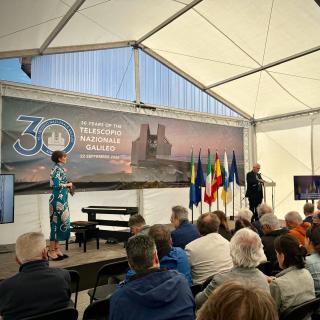 Tres jornadas, del 22 al 24 de septiembre, para celebrar la historia del TNG y mirar hacia el futuro de la astronomía Treinta años de investigación astronómica, innovación tecnológica, formación y colaboración internacional. El Telescopio Nazionale Galileo (TNG) celebra estos días el 30º aniversario de su inauguración con tres jornadas de actividades que se desarrollan del 22 al 24 de septiembre de 2026 en La Palma. El encuentro, titulado “Thirty Years of the Telescopio Nazionale Galileo - Celebrating Past, Present and Future of the Largest Italian Optical Telescope”, reúne a astrónomosAdvertised on