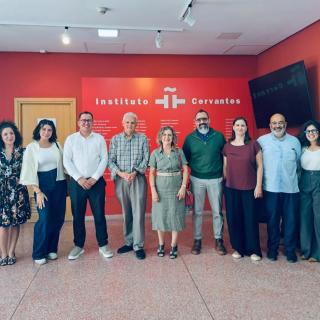
El Instituto de Astrofísica de Canarias (IAC) continúa con las actividades divulgativas del proyecto NATE ( North African Telescope Eclipse ) en torno a los eclipses total de Sol de los años 2026 y 2027. Así, esta semana una delegación del proyecto, encabezada por el director del IAC, Valentín Martínez Pillet, se ha trasladado a Marruecos para compartir la fascinación que nos inspiran los eclipses con alumnado de los colegios españoles de Casablanca y Rabat, como anticipo del gran evento que tendrá lugar el 12 de agosto de 2027. Junto a Martínez Pillet, el responsable del proyecto NATE
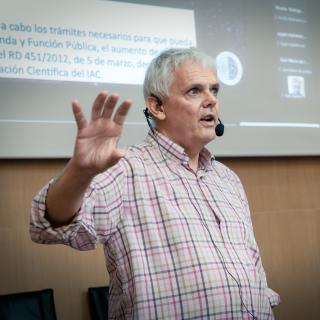
En el marco del CXLVIII aniversario del nacimiento del ilustre científico canario Blas Cabrera y Felipe, la Real Sociedad Económica de Amigos del País de Tenerife (RSEAPT) acogerá una conferencia a cargo de Valentín Martínez Pillet, director del Instituto de Astrofísica de Canarias (IAC) y experto en Física Solar. La charla tendrá lugar el próximo martes 24 de febrero a las 18:00 horas en la sede de esta institución en La Laguna. Bajo el título “Viviendo con una estrella: el bueno, el feo y el malo”, Martínez Pillet explorará la relación entre la Tierra y el Sol. La charla, que forma parte
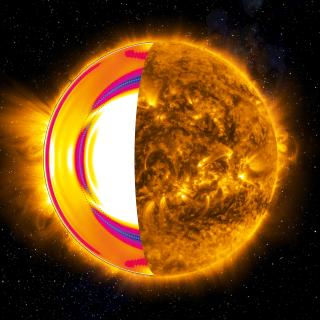
An international team composed of Drs. Sylvain G. Korzennik, from the Center for Astrophysics | Harvard & Smithsonian , and Antonio Eff-Darwich Peña, from the University of La Laguna and the Instituto de Astrofísica de Canarias, has published a pioneering study aimed at improving our understanding of the Sun’s internal structure. The work, published in The Astrophysical Journal , stands out for its use of exceptionally long helioseismic time series, exceeding twenty-five years of continuous observations, to analyze the deepest layers of the Sun. Helioseismology is the study of patterns of