
It may interest you
-
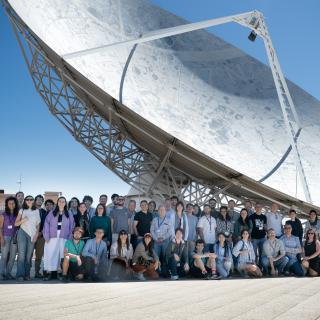 Durante tres días, especialistas en física de partículas, astrofísica, cosmología, neutrinos, rayos gamma y simulaciones compartieron en Tenerife los últimos avances para descifrar uno de los mayores enigmas del Universo. El Instituto de Astrofísica de Canarias (IAC) acogió la semana pasada, del 17 al 19 de junio, el 23rd MultiDark Meeting, un encuentro científico que reunió a especialistas de distintos centros de investigación españoles para abordar una de las grandes preguntas abiertas de la física contemporánea: ¿de qué está hecha la materia oscura? El congreso fue organizado por la líneaAdvertised on
 -
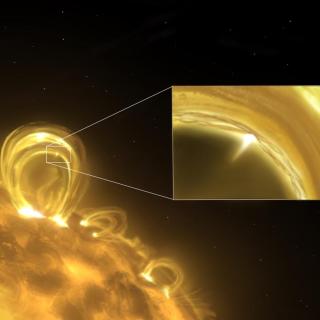 An international team of researchers led by the Instituto de Astrofísica de Canarias (IAC) and the Universidad de La Laguna (ULL), has unveiled a breakthrough explanation for the origin of tiny, jet-like plasma ejections in the solar atmosphere, known as “nanojets.” These elusive events which are recently discovered by the NASA’s solar telescopes are thought to play an important role in heating and sustaining the solar corona at temperatures above one million Kelvin. Why Study Nanojets? For decades, solar physicists have been puzzled by the so-called “coronal heating problem.” While the SunAdvertised on
 -
 The Instituto de Astrofísica de Canarias (IAC) has been honoured with the Canary Islands Diamond Award in the category of Business and Economic Innovation, a distinction granted by Canal 4 Tenerife as part of the first edition of these awards on the occasion of its 30th anniversary. The recognition is bestowed “in acknowledgement of its scientific excellence and its international projection from the Canary Islands” and highlights the IAC’s contribution to the development of a knowledge-based economy in the Archipelago. The IAC was selected as the winner following a jury evaluation processAdvertised on