
Bibcode
Euclid Collaboration; Mellier, Y.; Abdurro'uf; Acevedo Barroso, J. A.; Achúcarro, A.; Adamek, J.; Adam, R.; Addison, G. E.; Aghanim, N.; Aguena, M.; Ajani, V.; Akrami, Y.; Al-Bahlawan, A.; Alavi, A.; Albuquerque, I. S.; Alestas, G.; Alguero, G.; Allaoui, A.; Allen, S. W.; Allevato, V.; Alonso-Tetilla, A. V.; Altieri, B.; Alvarez-Candal, A.; Alvi, S.; Amara, A.; Amendola, L.; Amiaux, J.; Andika, I. T.; Andreon, S.; Andrews, A.; Angora, G.; Angulo, R. E.; Annibali, F.; Anselmi, A.; Anselmi, S.; Arcari, S.; Archidiacono, M.; Aricò, G.; Arnaud, M.; Arnouts, S.; Asgari, M.; Asorey, J.; Atayde, L.; Atek, H.; Atrio-Barandela, F.; Aubert, M.; Aubourg, E.; Auphan, T.; Auricchio, N.; Aussel, B.; Aussel, H.; Avelino, P. P.; Avgoustidis, A.; Avila, S.; Awan, S.; Azzollini, R.; Baccigalupi, C.; Bachelet, E.; Bacon, D.; Baes, M.; Bagley, M. B.; Bahr-Kalus, B.; Balaguera-Antolinez, A.; Balbinot, E.; Balcells, M.; Baldi, M.; Baldry, I.; Balestra, A.; Ballardini, M.; Ballester, O.; Balogh, M.; Bañados, E.; Barbier, R.; Bardelli, S.; Baron, M.; Barreiro, T.; Barrena, R.; Barriere, J. -C.; Barros, B. J.; Barthelemy, A.; Bartolo, N.; Basset, A.; Battaglia, P.; Battisti, A. J.; Baugh, C. M.; Baumont, L.; Bazzanini, L.; Beaulieu, J. -P.; Beckmann, V.; Belikov, A. N.; Bel, J.; Bellagamba, F.; Bella, M.; Bellini, E.; Benabed, K.; Bender, R.; Benevento, G.; Bennett, C. L.; Benson, K.; Bergamini, P. et al.
Bibliographical reference
Astronomy and Astrophysics
Advertised on:
5
2025
Journal
Citations
933
Refereed citations
756
Description
The current standard model of cosmology successfully describes a variety of measurements, but the nature of its main ingredients, dark matter and dark energy, remains unknown. Euclid is a medium-class mission in the Cosmic Vision 2015–2025 programme of the European Space Agency (ESA) that will provide high-resolution optical imaging, as well as near-infrared imaging and spectroscopy, over about 14 000 deg2 of extragalactic sky. In addition to accurate weak lensing and clustering measurements that probe structure formation over half of the age of the Universe, its primary probes for cosmology, these exquisite data will enable a wide range of science. This paper provides a high-level overview of the mission, summarising the survey characteristics, the various data-processing steps, and data products. We also highlight the main science objectives and expected performance.
Related projects
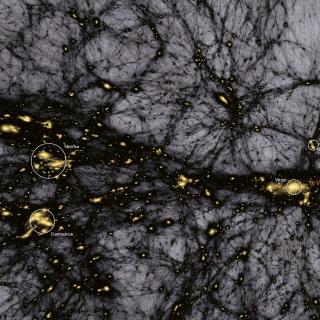
Cosmology with Large Scale Structure Probes
The Cosmic Microwave Background (CMB) contains the statistical information about the early seeds of the structure formation in our Universe. Its natural counterpart in the local universe is the distribution of galaxies that arises as a result of gravitational growth of those primordial and small density fluctuations. The characterization of the
Francisco Shu
Kitaura Joyanes
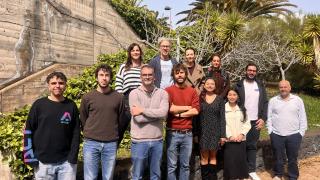
Traces of Galaxy Formation: Stellar populations, Dynamics and Morphology
We are a large, diverse, and very active research group aiming to provide a comprehensive picture for the formation of galaxies in the Universe. Rooted in detailed stellar population analysis, we are constantly exploring and developing new tools and ideas to understand how galaxies came to be what we now observe.
Anna
Ferré Mateu
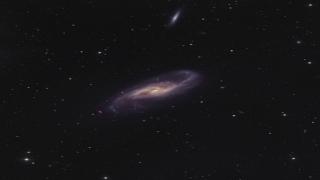
Spiral Galaxies: Evolution and Consequences
Our small group is well known and respected internationally for our innovative and important work on various aspects of the structure and evolution of nearby spiral galaxies. We primarily use observations at various wavelengths, exploiting synergies that allow us to answer the most pertinent questions relating to what the main properties of
Johan Hendrik
Knapen Koelstra
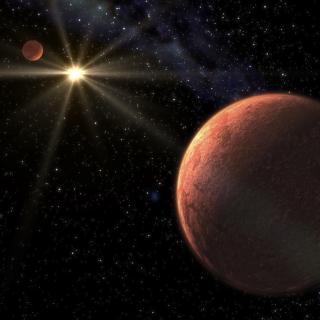
Very Low Mass Stars, Brown Dwarfs and Planets
Our goal is to study the processes that lead to the formation of low mass stars, brown dwarfs and planets and to characterize the physical properties of these objects in various evolutionary stages. Low mass stars and brown dwarfs are likely the most numerous type of objects in our Galaxy but due to their low intrinsic luminosity they are not so
Rafael
Rebolo López
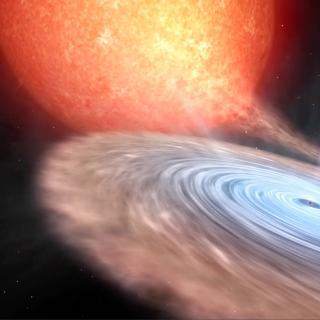
Black holes, neutron stars, white dwarfs and their local environment
Accreting black-holes and neutron stars in X-ray binaries provide an ideal laboratory for exploring the physics of compact objects, yielding not only confirmation of the existence of stellar mass black holes via dynamical mass measurements, but also the best opportunity for probing high-gravity environments and the physics of accretion; the most
Montserrat
Armas Padilla
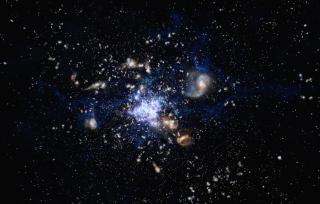
Molecular Gas and Dust in Galaxies Across Cosmic Time
Two of the most fundamental questions in astrophysics are the conversion of molecular gas into stars and how this physical process is a function of environments on all scales, ranging from planetary systems, stellar clusters, galaxies to galaxy clusters. The main goal of this internal project is to get insight into the formation and evolution of
Helmut
Dannerbauer