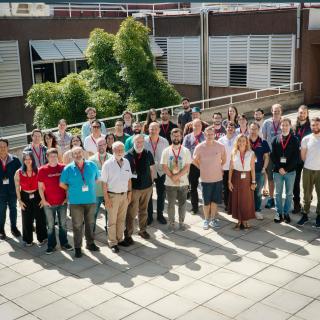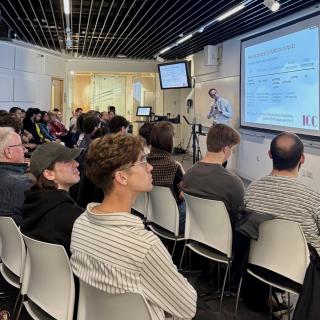

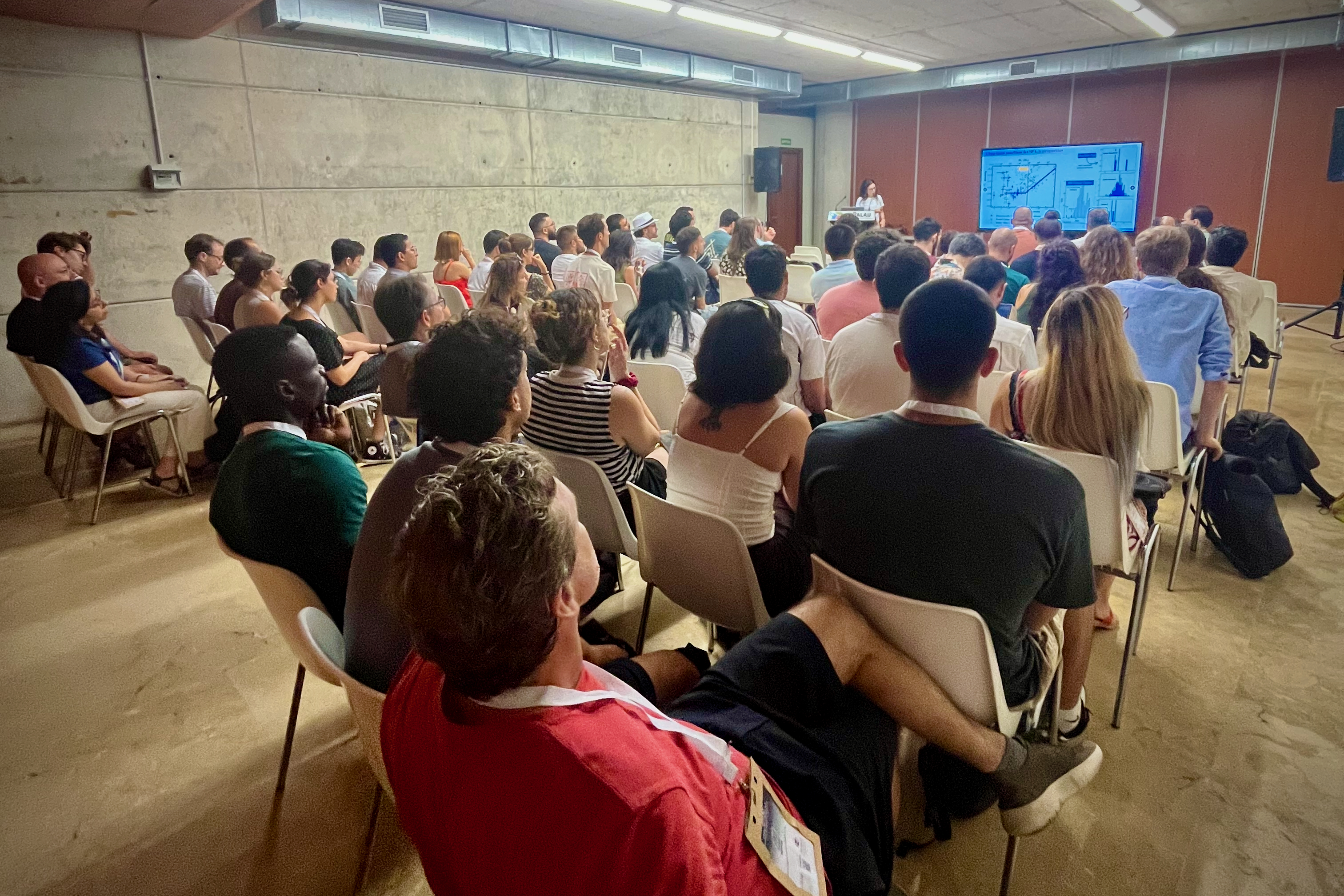
Arianna Di Cintio, a researcher at the Instituto de Astrofísica de Canarias and a lecturer at the University of La Laguna, chaired the organisation of this event, which took place as part of the 17th Scientific Meeting of the Spanish Astronomical Society (SEA). The symposium attracted more than 75 participants at each of its four sessions, featured over 30 scientific presentations and welcomed six guest experts.
The Instituto de Astrofísica de Canarias (IAC) has organised the first symposium of the Spanish Astronomical Society (SEA) dedicated to the computational modelling of galaxies and the study of large-scale structures in the Universe. The event, organised by Arianna Di Cintio, a researcher at the Canary Islands Institute of Astrophysics (IAC) and lecturer at the University of La Laguna (ULL), together with José Oñorbe, a researcher and lecturer at the University of Seville, took place from 13 to 16 July in Tarragona, as part of the SEA’s 17th Scientific Meeting.
With over 75 attendees at each of its four sessions, more than 30 scientific presentations and six guest speakers, the symposium highlighted the consolidation of the Spanish community dedicated to numerical cosmology and galaxy formation simulations, a field that has seen significant scientific growth in recent years.
The 17th SEA Scientific Meeting, held from 13 to 17 July in Tarragona, is the leading national forum for the exchange of results and advances in astronomy and astrophysics. Held every two years, it brings together researchers, students and members of the astronomical community to foster collaboration between institutions and strengthen the international profile of research carried out in Spain.
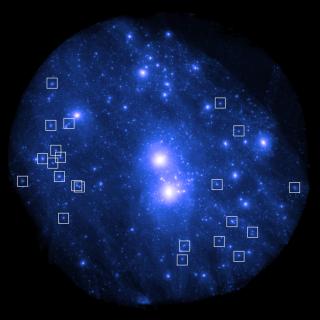
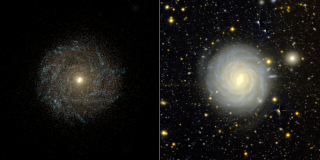
The organisation of this new symposium reflects the growth and maturity achieved by the Spanish community dedicated to the computational study of galaxy formation and the evolution of the Universe. At present, the various research groups are working with highly complementary methodologies, ranging from large-volume cosmological simulations and high-resolution zoom-in models to semi-analytical models, analysis of large datasets and artificial intelligence techniques.
This scientific development highlighted the need for a dedicated session within the SEA meeting to exchange findings, discuss new approaches, identify synergies and foster the establishment of new national and international collaborations. The symposium was also established with the aim of helping to raise the profile of Spanish astronomy in fields such as galaxy formation theory and numerical cosmology.
The high attendance recorded at all sessions confirmed the interest in this discipline and the current phase of consolidation being experienced by the Spanish scientific community dedicated to this field of study. “The response from the scientific community has exceeded our expectations,” says Arianna Di Cintio, a researcher at the IAC and chair of the symposium’s organising committee. “The high level of participation demonstrates that there is a very active and well-established community focused on computational galaxy formation. This event has brought together specialists working with a wide range of approaches and laid the foundations for future scientific collaborations,” she emphasises.
The success of this first edition paves the way for computational galaxy formation and the study of large-scale structures in the Universe to continue to have their own dedicated section at future SEA meetings, reflecting the growing importance of this line of research within Spanish astrophysics.
More information:
Web del Simposio
Contact at the IAC:
Arianna Di Cintio, adicintio [at] iac.es (adicintio[at]iac[dot]es)