
News

This section includes scientific and technological news from the IAC and its Observatories, as well as press releases on scientific and technological results, astronomical events, educational projects, outreach activities and institutional events.

  • dm_fig1
    Only a handful of observations truly constrain the nature of dark matter, which is why dozens of different physical models are still viable. Several of the most popular alternatives predict that dark matter halos slowly “thermalize” over time, gradually changing shape and expanding until they form a central region of nearly constant density -- a core. This transformation would not occur if the dark matter particles were completely collision-less, as assumed in the standard model. Therefore, the presence or absence of such a core provides a powerful way to distinguish between the standard
    Advertised on
  • Interstellar comet 3I/ATLAS
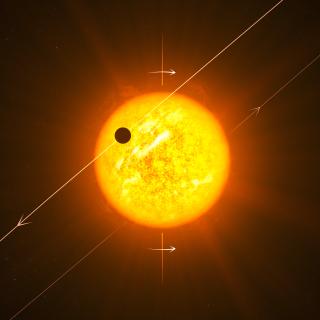
    The discovery, made in collaboration between the IAC Solar System Group and Light Bridges, reveals the rotation period of comet 3I/ATLAS The Two-metre Twin Telescope (TTT) has made a pioneering discovery in astronomy: the first detection of a jet of gas and dust and its periodic modulation in an interstellar comet, 3I/ATLAS. The study, published in the journal Astronomy & Astrophysics, provides the first evidence of localised activity from an interstellar nucleus, offering unique insight into the nature of a celestial body that formed outside our Solar System. An extraordinarily normal
    Advertised on
  • Artistic representation of the Cosmic Brain project, which adapts cosmological analysis techniques to neuroimaging
    A multidisciplinary team of astrophysicists, neuroscientists, engineers, and musicians has unveiled a pioneering method to “listen” to the structure of the human brain. Published in Nature Scientific Reports , the study presents the first higher-order sonification applied to structural magnetic resonance imaging (MRI) data. This technique involves transforming three-dimensional information about the brain into sound, taking into account the spatial relationships and complex structure of the data. To do this, mathematical tools originally developed to study the large-scale structure of the
    Advertised on
  • Artistic impression of collisions between dark matter particles. One collision per particle every 10 billion years explains the distribution of dark matter in ultra-faint dwarf galaxies.
    Ultra-faint dwarf galaxies, among the tiniest and faintest galaxies known, may hold the key to understanding one of the Universe’s biggest mysteries: the true nature of dark matter. A new study reveals that even a single collision between dark matter particles every 10 billion years — roughly the age of the Universe — is enough to explain the dark matter cores observed in these small systems. These galaxies, which contain only a few thousand stars, are dominated by dark matter and have relatively simple evolutionary histories. That makes them ideal cosmic laboratories for testing theories
    Advertised on
  • GRANCAIN instrument installed on the Gran Telescopio Canarias (GTC or Grantecan)
    During October, the Adaptive Optics System team at the Gran Telescopio Canarias (GTCAO) of the Instituto de Astrofísica de Canarias (IAC), in collaboration with the technical team at the Gran Telescopio Canarias (GTC or Grantecan), successfully completed the integration of the GRANCAIN instrument into the world's largest optical-infrared telescope. The installation was carried out at the GTCAO outlet on the telescope's Nasmyth B platform, a key step in initiating performance testing of the new adaptive optics system. This is the first scientific instrument to operate using the GTC's adaptive
    Advertised on
  • GalIMF
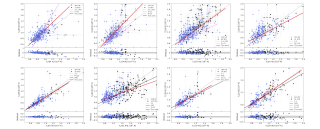
    We present, for the first time, model spectra of single-age, single-metallicity stellar populations computed with the E-MILES evolutionary synthesis code incorporating an environment-dependent, variable galaxy-wide initial mass function (gwIMF). This gwIMF, calculated using the GalIMF code, is rooted in the integrated galactic initial mass function (IGIMF) theory, which predicts IMF variations as a function of the star formation rate and the metallicity. By coupling these two codes, we generated a comprehensive library of single-burst stellar population spectra uniquely sensitive to gwIMF
    Advertised on